Flooding in Brisbane
Brisbane sits on a floodplain which means flooding is possible. Council works to manage and reduce the risks of flooding to ensure our city remains safe and liveable.
Every flood is different, and it is important for residents, businesses and community organisations to understand the types of flooding and flood likelihood that may impact your property. This page will help you understand the many aspects of flooding in Brisbane and aims to support residents, community organisation or businesses to be safe, resilient and ready. Read about Council's flood information and find out how to protect your home, business and community organisation from flooding.
Flood Information online
Use Council’s free Flood Awareness Map to check the likelihood of flooding in your area or access the FloodWise Property Report to understand the risks, types of flooding and building requirements for your specific property.
Useful flood information
Resources for residents
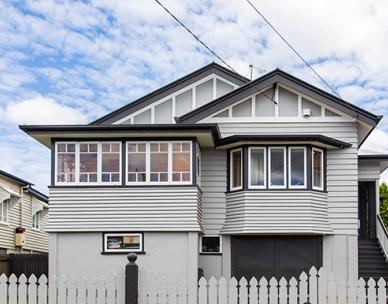
Find out how you can protect your house and family from flooding using our online tools, guides and checklists.

Resources for businesses
Use our online flooding tools, guides and checklists to help you prepare and protect your business from flooding.

Resources for community organisations
Protect your community organisations and premises from flooding through these online tools, guides and checklists.
Real-time severe weather data or flood information
During a severe weather or flood event, it is important to be prepared and stay informed. Sign up to receive Brisbane Severe Weather Alerts and visit Council’s Emergency Dashboard for real-time severe weather data and flood information.
Glossary of terms - useful flood information definitions
Glossary of terms - useful flood information definitions
Annual Exceedance Probability (AEP)
The chance of a flood event can be described using a variety of terms, but the preferred method is the Annual Exceedance Probability (AEP). A flood with a 1% AEP has a 1% chance (or 1 in 100 odds) of being exceeded in any year. Currently, the 1% AEP event is designated as having an 'acceptable' risk for planning purposes nearly everywhere in Australia. However, good planning needs to consider more than just the 1% AEP flood.
Australian Height Datum (AHD)
The Australian Height Datum (AHD) is the official national vertical datum for Australia. The datum that sets mean sea level as zero elevation. The level of 0.0 metres AHD is approximately mean sea level. All levels are based around this benchmark that is recognised as the Australian standard. AHD is a measurement used in the FloodWise Property Report and Council flood studies.
Australian Rainfall and Runoff (AR&R)
Australian Rainfall and Runoff (ARR) is a national guideline document, data and software suite that can be used for the estimation of design flood characteristics in Australia. Geoscience Australia supports ARR as part of its role to provide authoritative, independent information and advice to the Australian Government and other stakeholders to support risk mitigation and community resilience. ARR is pivotal to the safety and sustainability of Australian infrastructure, communities and the environment.
Average Recurrence Interval (ARI)
Recurrence Interval is usually measured in years and is an outdated way of describing the likelihood of flood occurring. It is the long-term average interval between floods of a particular size.
Backflow devices
Backflow devices reduce the chance of backflow flooding by preventing water flowing back up stormwater drainage paths and are one of the many ways Council helps to manage flooding in Brisbane. Read about backflow devices.
City Plan 2014
City Plan 2014 is Brisbane City Council’s plan for the future development of Brisbane. It guides how land in Brisbane can be used and developed. It also helps plan for infrastructure to support growth and create a more diversified economy while continuing to protect our city’s enviable way of life. As part of City Plan, a new hazard-based Flood Overlay Code was introduced, to ensure that development adequately considers flooding. Flood Planning Areas were defined for the Brisbane River, creek flooding and overland flow to guide future development in flood-prone areas. Since the adoption of the Flood Overlay Code many practical outcomes have been realised including:
- properties raised to achieve acceptable flood immunity
- developments designed in a way that maintain the conveyance of flood waters through a site
- essential electrical services suitably located to ensure public safety and minimise flood recovery following a flood.
Visit City Plan Online.
Creek Flooding Alerts
Creek alerts are sent when rain and/or creek levels in a nearby creek system indicate your property may be at risk of flooding. As the alerts are location based, warnings are only sent if your nominated address and/or mobile device location is at risk of flooding. The information provided by the creek flooding alerts is dependent on technology. Find out how you can sign up to receive alerts from the Brisbane Early Warning Alert Service . Fin out more about creek flooding alerts.
Data quality code
- Data Quality Code A – Level data based on recent surveyor report or approved as-constructed drawings.
- Data Quality Code B – Level data based on ground-based mobile survey or similar.
- Data Quality Code C – Level data derived from Airborne Laser Scanning or LiDAR information.
Defined Flood Events (DFE)
Defined Flood Event (DFE) is the 1% Annual Exceedance Probability (AEP) flood for creek/waterway, 2% AEP for overland flow flooding sources, or the Residential Flood Level (RFL) for Brisbane River flooding. The DFE for a particular locality is determined in accordance with the Flood Overlay Code.
The flood levels for these ‘events’ are provided in the technical FloodWise Property Report (where available). For further information, please refer to the Flood Planning Code within City Plan 2014.
Defined Flood Level (DFL)
The DFL for Brisbane River flooding is a level of 3.7 metres AHD at the Brisbane City Gauge based on a flow of 6800 m 3 /s.
Ground level
The elevation or height of natural ground at a location. In Australia, this elevation is usually expressed in metres AHD. See Australian Height Datum for more information.
Flood Awareness Map
The Flood Awareness Map shows where floods occur now and the likelihood or chance of different-size flood events occurring in the future. It is for awareness only and shows flood information for the present. The Flood Awareness Map provides relevant information to ensure that you and your property are prepared now. The Flood Awareness Map does not guide planning or development applications. FloodWise Property Report considers long-term future flood scenarios and is used to guide building and development.
Flood Action Plan
The Flood Action Plan is a complete version of Council’s response to the January 2011 Flood incorporating recommendations from the independent Flood Response Review Board and the Queensland Floods Commission of Inquiry Interim Report and Final Report. It demonstrates Council’s commitment to best preparing this city for inevitable future natural disasters. Read the Flood Action Plan for more information.
Flood Planning Area
Council has developed five Flood Planning Areas (FPA) for Brisbane River and creek/waterway flooding to guide future building and development in flood-prone areas. There is one FPA for local overland flow flooding. Storm tide flooding is mapped separately. The FPAs are designed to recognise the susceptibility of flooding. Susceptibility is a combination of frequency of flooding, the flood depth and the speed at which the water is travelling. Council has produced maps that show each of the five FPAs. FPAs will continue to be refined and updated if better information becomes available through flood modelling. Find more information about Flood Planning Areas .
Flood Overlay map in City Plan 2014
Overlay is a planning term to explain a type of map in City Plan. The Flood Overlay shows where different sources of flooding may occur and what level of hazard may occur due to the type of flooding. Having a flood overlay triggers the requirements of the flood code.
FloodSmart Future Strategy
Brisbane's FloodSmart Future Strategy 2012-2031 outlines Brisbane City Council's new approach to flood risk management. The strategy is based on national and international best practice and delivers coordinated integration of flood management tools. Flood risk management involves assessing and managing flood risks to reduce the risks to people and property. The FloodSmart Future Strategy uses four tools for flood risk management including: • flood-resilient buildings and infrastructure • flood awareness and information • land use planning and development control • flood emergency management.
Find more information about Brisbane's FloodSmart Future Strategy 2012-2031.
Flood Overlay Code
Flood Overlay Code in City Plan ensures that future development contributes to creating a safe and flood-resilient city in the future. Further details about overlay codes can be found in City Plan overlay codes .
Flood-resilient design
Flood-resilient design prepares buildings to withstand and recover from flooding events, while supporting everyday liveability and quality of life. It considers the use of materials, construction methods and the style of homes. Read more about flood-resilient design and building.
Flood Study
A flood study is the scientific investigation of flooding in a particular area, usually the catchment of a river system. It may involve hydrologic and hydraulic investigations and a statistical analysis of the frequency with which floods have occurred. The purpose of a flood study is to determine the flood risks for a range of flood events in a particular location.
Find out more information about flood studies.
FloodWise Property Report
A FloodWise Property Report is a technical report that provides property or lot-based flood information for building and development requirements. The report provides information on estimated flood levels, habitable floor level requirements and more technical information on the four sources of flooding from river, creek/waterway, storm tide and overland flow. Learn about how to read a FloodWise Property Report.
Impact
Impact is the terminology that is used to describe overland flow flooding. Find out more information about flood likelihood and impact.
Insurance
Insurance companies have access to flood risk data from a number of sources, including the National Flood Information Database (NFID), and may use their own flood mapping to determine premiums relating to flood risk. Find out more information about insurance.
Large Allotment
A property can be identified as either a Large Allotment of more than1000 square metres or is located within a Large Allotment. Flood levels may vary significantly across allotments of this size. Further investigations may be warranted in determining the variation in flood levels and the minimum habitable floor level across the site. For more information or advice, it is recommended you engage a member of the Registered Professional Engineers of Queensland.
LiDAR
LiDAR is Light Detection and Ranging. It is a remote sensing method that uses light in the form of a pulsed laser (in this case affixed to an aeroplane) to measure ranges (variable distances) to the Earth. From this data we prepare our maps of ground levels.
Likelihood
Likelihood is the terminology that is used to describe the annual chance of flooding from river, creek and storm tide. Find out more information about flood likelihood and impact.
Lot
A lot is a separate, distinct parcel of land created on either:
- registration of a plan of subdivision
- recording of particulars of an instrument.
Open Data
Through the Brisbane Open Data website, Council has released more than 1000 datasets that are re-usable, accessible and shareable. These datasets are available in a variety of formats and cover a wide range of topics including public transport, planning, environment, infrastructure and spatial data. A dedicated spatial data website allows for easy navigation and access to Council’s spatial data sets such as stormwater infrastructure and Brisbane City Plan 2014 data.
Maximum ground level
Highest ground level on the property based on available ground level information. A Registered Surveyor can confirm exact ground levels.
Minimum ground level
Lowest ground level on the property based on available ground level information. A Registered Surveyor can confirm exact ground levels.
Minimum habitable floor level (MHFL)
Minimum habitable floor level is the minimum level in metres AHD at which habitable areas of development must be constructed. A habitable area generally includes bedrooms, living rooms, kitchen, study, family and rumpus rooms. Note. If a property is a Large Allotment or within an overland flow path, Council is unable to supply an accurate MHFL (for design purposes) on the FloodWise Property Report. In this situation, Council recommends that you contact a member of the Registered Professional Engineers of Queensland to determine the minimum habitable floor level for a specific property.
National Flood Information Database (NFID)
In partnership with state and territory governments, the general insurance industry has developed and licensed the National Flood Information Database (NFID) for use by insurers in determining the flood risk to individual properties. NFID is an address database containing 11.3 million property addresses, overlayed with the known flood risk according to government flood mapping. For further information, please refer to the Insurance Council of Australia.
Parcel
A parcel or property is an area of land with defined boundaries, under unique ownership.
Planning scheme
Council’s planning scheme known as City Plan has been prepared in accordance with the Sustainable Planning Act 2016. It is a framework for managing development in Brisbane in a way that advances the purpose of the Sustainable Planning Act 2016. The planning scheme sets out Council's intention for future development in the planning scheme area, over the next 20 years.
Property
A property is land that contains one or more lots. The multiple lot warning will show on the FloodWise Property Report if a property selected contains more than one lot.
Rainfall
Rainfall is the amount of precipitation, in the form of rain (water from clouds), that descends onto the surface of earth, whether it is on land or water.
Raster Surface
Raster surface is a geographic information system product consisting of a matrix of cells (organised into a grid), where each cell contains a surface value.
Referable dam
Some dams are deemed ‘referable dams’ under Queensland Government legislation. This is determined by an assessment that shows there is the potential risk of two or more people being impacted by downstream flooding due to dam failure. Read more about referable dams.
Registered Professional Engineer of Queensland (RPEQ)
The Registered Professional Engineer Queensland (RPEQ) certification provides client and public confidence that a RPEQ-certified design has been professionally examined and audited for assessment of its intended purpose, the quality of the design, associated risks, as well as the safety considerations and implications. RPEQ certification can only be undertaken by engineers who have been assessed by the Boardof Professional Engineers Queensland as meeting the required standards of qualifications, skill, competency and professionalism.
Resilience
Resilience is the ability to plan, prepare, respond and return to normal life with minimal disruption following an adverse event. It means that an informed and empowered community will have access to the information they need to act on to minimise the impact of future flooding. The ability to be resilient is now seen as one of the key attributes of a sustainable city - economically, environmentally, socially and institutionally. A resilient city balances community, environment, built form and infrastructure to provide a liveable city now and for future generations.
Tailwaters
Tailwater generally refers to the downstream section of a particular waterway. The tailwater levels may be influenced by the ocean, lake/reservoir or a larger river or creek.
Now that you have read the glossary of flood terminology, return to Flood Information Hub for more information about flooding.