- Do not enter your home until you are sure it’s safe.
- Check all power and gas supplies are turned off.
- Identify any materials likely to contain asbestos or dangerous chemicals. Have them removed by a specialist before commencing your clean-up activities.
- Watch out for dangerous wildlife, such as spiders or snakes, which may have entered your property.
- Avoid contact with flood water — it is often contaminated by sewage.
Disaster recovery
Access personal support services after a disaster. Find ways to get involved in disaster recovery in your community.
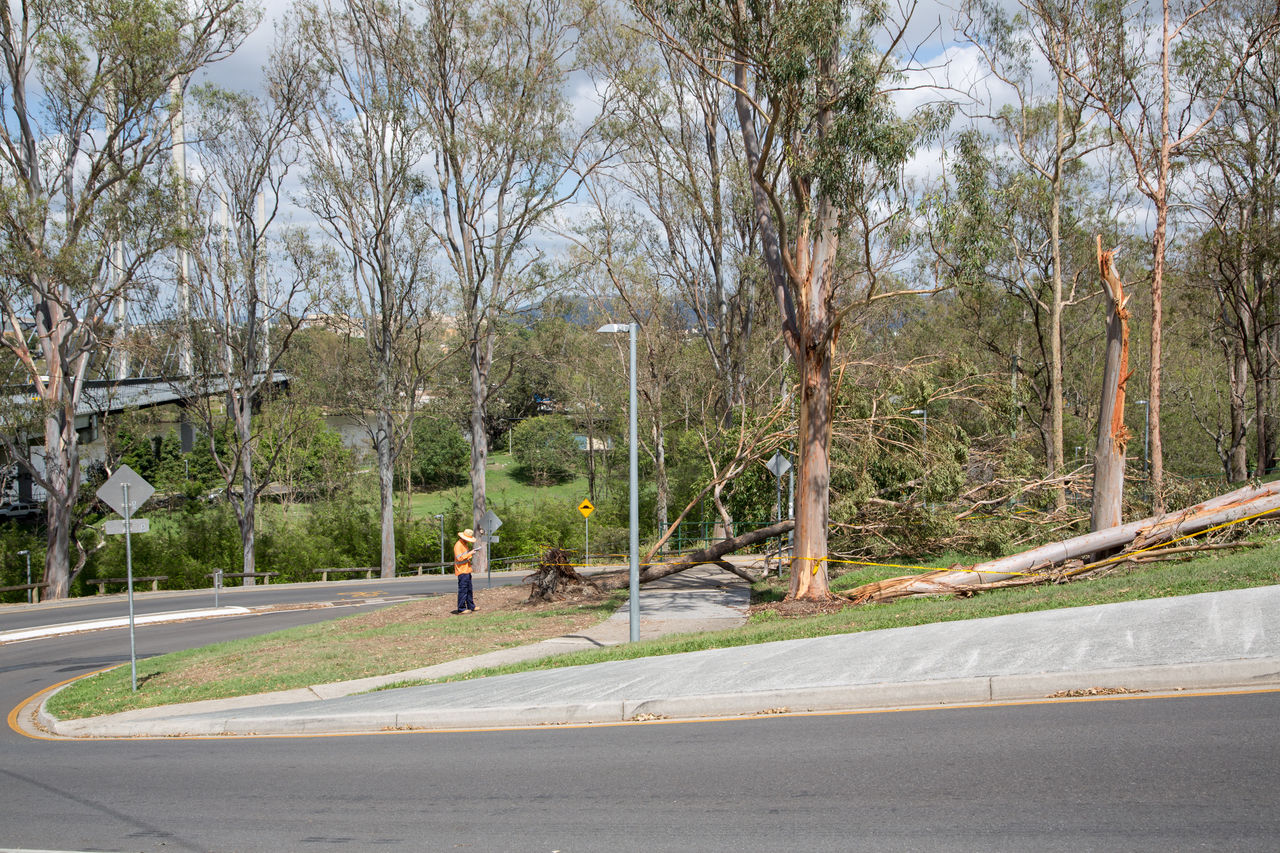
Disaster recovery support
Floods, bushfires and severe weather can have a devastating impact on households, communities and businesses in Brisbane.
After a disaster, we work with emergency services, businesses and communities to get the city back on its feet. Together we:
- clean up and clear debris
- rebuild damaged buildings and infrastructure
- restore local habitat
- get the economy back on track
- support the emotional, social and physical wellbeing of people affected.
You don’t have to recover from a disaster alone. There is support you can turn to as you take disaster recovery steps.
You can also be part of Brisbane’s recovery effort by volunteering your time or donating to help communities in need.
Community recovery hubs
Community recovery hubs bring together services so residents can access assistance. This includes, government agencies, insurance companies and other support services such as the Red Cross.
These hubs are managed by the Queensland Government. Locations will be announced when hubs are opened.
Find more information on our emergency dashboard or the Queensland Government website. For the latest information or assistance, phone the Community Recovery Hotline on 1800 173 349.
Recovering safely after a flood
After a flood, it’s natural to want to get back into your home, clean up and start repairs. But flood-affected homes can pose serious health risks – including mould, contaminated water and structural damage.
The following tips are designed to help you reduce health risks and make informed decisions during the recovery process. By following safe clean-up practices, you can protect yourself and your family.
- Things that have been touched by flood water can contain contaminants, bacteria and mould. Wear protective clothing such as long sleeves, long pants, sturdy gloves, rubber boots, a face mask and goggles.
- Treat and cover any open wounds.
- Allow for adequate ventilation by opening windows and doors.
- Wash your hands regularly with soap and drinking quality water, or use hand sanitiser.
- Protect yourself against mosquito bites.
- Read tips or seek advice from the Queensland Building and Construction Commission (QBCC).
- Before turning on the power, contact a licensed electrician to do a safety check of:
- all electrical equipment that has been inundated, and/or
- all electrical equipment that has potentially come into contact with flood water.
- For more information about getting reconnected after a flood, visit Energex.
- Gas installation and appliances need to be inspected by a licensed gasfitter before they can be used.
- Identify what items you can keep or should throw away.
- Run taps for a few minutes to remove any contaminated water inside the tap.
- If you are unsure about the quality of the water, use bottled water or boil water before use.
- For all water faults and interruptions, contact Urban Utilities.
- Throw away food that has been in contact with floodwater. Also dispose of any refrigerated food that has been left unrefrigerated for more than 4 hours.
Take photos of any damage including to equipment, furniture, furnishings, floor covering, appliances etc. before removing them from your premises.
Contact your insurance broker or insurance company as soon as possible to check your policy requirements.
Financial assistance may be available to help support your recovery. Learn more on the Queensland Government website.
The Queensland Government has more information on rebuilding and cleaning up, physical health and mental health and wellbeing after a disaster.
Volunteer after a disaster
Help make a difference to the community’s recovery from natural disasters by volunteering.
Volunteers lend their time and expertise to help speed up the recovery process.
Volunteering Queensland coordinates registration for volunteer clean-ups in communities affected by floods and other emergencies.
You can register with Volunteering Queensland as:
- an individual
- an organisation
- a volunteer group.
Make a donation
Donations provide much-needed relief to people recovering from a disaster.
Local charities and disaster appeals use donations to:
- distribute emergency supplies, including food and medical supplies
- provide clothing, bedding and furniture to impacted households
- fund repairs and rebuilding of infrastructure.
Charities and groups you can donate to include:
Recovery for businesses
Floods, bushfires and severe storms can have a serious impact on your business finances and property.
Damage from a disaster can force you to close, relocate or need specialist advice during recovery. It's also important for you to check in with your suppliers or customers — impacts to their business could affect you.
Cleaning up and clearing the mess caused by a natural disaster can take time.
Before returning to your business premises, consider whether your actions could impact your:
- insurance
- personal safety
- electrical and power safety
- gas safety
- asbestos exposure
- food safety.
Download the clean-up considerations and safety tips fact sheet for business owners.
Dispose of your waste and debris at Council’s resource recovery centres. They accept:
Depending on the impact of the disaster, you may need specific types of support or business advice.
This includes:
- financial and tax assistance
- legal aid
- Australian and Queensland Government support
- non-government support.
For information on the support you can access, download the Flood support for small businesses fact sheet.
For more resources to help you rebuild and recover after a disaster, visit Business Queensland.
Locate missing pets or animals
To help reunite pets and their owners, we keep a register of lost and found animals in Brisbane.
If your family pet is missing after a disaster, you can:
- check if they've been impounded
- phone RSPCA on 1300 363 736
- contact local vets.
If you find a lost animal, there are steps you can take to help reunite the animal with its owner.
- Check for any identification on the pet (e.g. name tag, Council registration tag, RSPCA VIP tag).
- Contact the person or organisation on the tag.
- Ask your neighbours if they're missing any pets or know who the animal belongs to.
- Report a found pet to Council, the RSPCA or your local vet.

Frequently asked questions
To prepare for a disaster:
- Check your risk.
- Make sure you prepare before a natural disaster strikes.
- Find support to help you respond to an emergency.
Recovery from natural disasters can take days or years, depending on the impact to your home or business.
To reduce the impact on your property, it’s important to prepare for an emergency.
Contact your insurer to discuss what your policy covers. They will advise on what to do next.
Keep records and photos of any damage to your property or contents.
The Insurance Council of Australia has more information on what to do during and after a natural disaster. Find helpful resources via their website.
Council encourages you to properly dispose of sandbags once severe weather has passed.
Do not empty or place full sandbags in your general waste bin. Empty sandbags can be placed in general waste bins.
Sandbags that have been in contact with floodwater can be taken to our resource recovery centres.

Always get a professional to safely remove asbestos from your home. Asbestos fibres are a dangerous health hazard.
For more information on asbestos safety, visit Queensland Government.